What a Full Pool Renovation Includes: From Shell to Swim-Ready

There comes a point in a pool’s life when ongoing repairs stop making financial sense. The surface is rough and stained beyond chemical treatment. The equipment has been patched and replaced piecemeal for years. The tile along the waterline is cracked and missing chunks. The deck feels dated and uncomfortable underfoot. At this stage, incremental repairs don’t add up to a renewed pool — they add up to an expensive holding pattern.
A full pool renovation changes the equation. Instead of fixing yesterday’s problem while tomorrow’s is already developing, a complete renovation rebuilds from the shell outward: new surface, new equipment, new tile, new coping, and optionally a new deck. When it’s done right, it extends the useful life of the pool by 20 or 30 years and produces an end result that looks and performs like a new build at a fraction of new construction cost.
At Beltway Pools, we have completed full renovations on pools throughout Northern Virginia and Maryland, from older inground pools in Fairfax County that were built in the 1980s to mid-2000s builds in Loudoun County in need of a complete modernization. Here’s what a real full renovation involves.
What “Full Renovation” Actually Means
The term “full renovation” is not universally defined in the pool industry, which can lead to confusion when homeowners are comparing quotes. For our purposes — and for most serious renovation work — a full renovation includes:
- Shell resurfacing: Removing the existing plaster, aggregate, or pebble finish down to the gunite or shotcrete shell, then applying a new surface material
- Tile replacement: Removing and replacing the waterline tile band and any interior tile features
- Coping replacement: Removing and replacing the coping stones or poured coping that form the edge of the pool
- Equipment replacement: Replacing the pump, filter, heater, and automation system with current-generation equipment
- Optional deck work: Replacing or resurfacing the surrounding pool deck, adding new materials or expanding the footprint
A partial renovation — sometimes called a “surface renovation” — may only include resurfacing without equipment or coping work. It’s a valid option when equipment is newer and the only issue is surface age. A full renovation is the right choice when multiple major systems are due or when the goal is a genuinely transformed pool.
Resurfacing the Shell: The Foundation of Every Renovation
The interior surface of a gunite or shotcrete pool does not last forever. Standard white plaster typically needs resurfacing every 8–15 years depending on water chemistry maintenance, usage, and original installation quality. Aggregate and pebble surfaces (which have become the dominant choice for new installations and renovations over the past two decades) last longer — typically 15–25 years with proper care.
Signs that resurfacing is needed:
- Rough, abrasive texture that scratches feet and damages swimwear
- Staining that does not respond to chemical treatment or acid washing
- Visible pitting, etching, or delamination (plaster separating from the shell)
- Discoloration that is uniform and chemistry-related rather than isolated spots
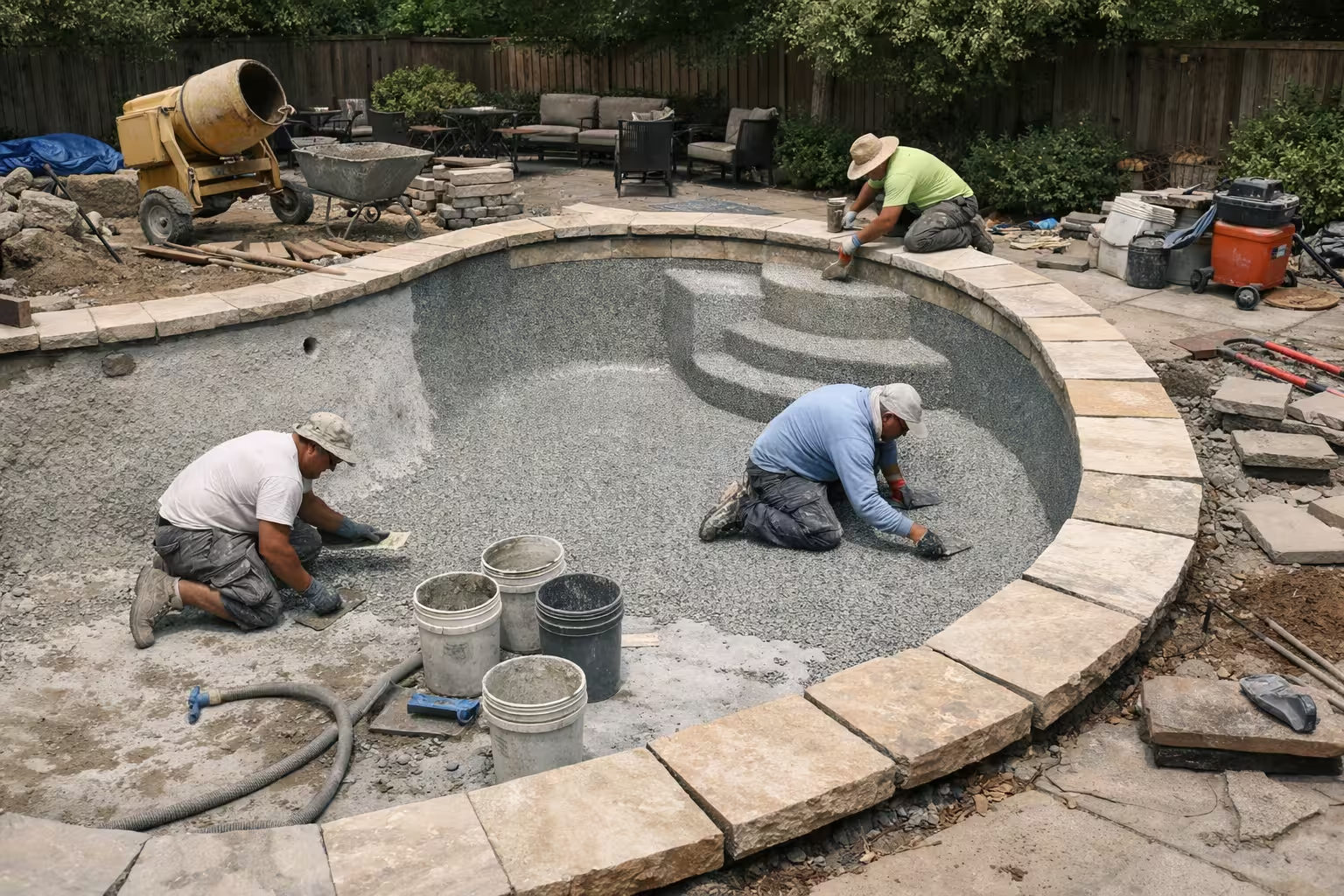
The resurfacing process starts with draining the pool completely. The existing surface is removed by chipping or grinding down to the structural shell. The shell is inspected and any cracks or structural issues are repaired. Then the new surface material is applied in multiple layers, finished to the specified texture and color, and cured before refilling.
Surface material options and their typical characteristics:
- White plaster (marcite): The most traditional and least expensive surface. Smooth texture, bright white finish. Shorter lifespan than aggregate options. Good choice for budget-constrained renovations.
- Exposed aggregate: Pebble or quartz aggregate mixed into the plaster and exposed by washing the surface during application. More durable and longer-lasting than plain plaster, with a natural texture that is less rough than it appears. Available in many colors. Mid-range cost.
- Pebble Tec and similar premium aggregates: A dense, rich pebble finish that is considered the premium option. Extremely durable, excellent color retention, and a distinctive tactile quality that many homeowners prefer. Highest cost among surface options but significantly longer life.
- Quartz aggregate: A blend of quartz crystals that produces a smooth, sparkling finish with better durability than standard plaster. Popular in the DMV for its longevity and aesthetic versatility.
In Northern Virginia and Maryland, where pools are used intensively in summer and subjected to significant winter-spring chemical fluctuations, aggregate and pebble surfaces provide better long-term value than plain plaster for most pools.
Tile and Coping Replacement
Tile and coping work is typically done in conjunction with resurfacing because the coping must be reset or replaced to accommodate the new surface, and replacing the waterline tile requires the pool to be drained.
Waterline tile serves both a decorative and functional purpose — it marks the waterline visually and protects the area where water meets the pool edge from chemical and mineral attack. Over time, tile adhesive deteriorates, grout cracks, and individual tiles break or fall off. A waterline with missing or cracked tile is both unsightly and eventually damaging to the underlying substrate.
Modern tile options have expanded significantly from the standard blue ceramic squares of older pools. Homeowners renovating pools in McLean, Bethesda, Reston, or Ashburn today are choosing from glass tile, natural stone tile, large-format porcelain, and custom pattern options that make the renovation look nothing like the original build.
Coping is the material that caps the bond beam at the pool edge. It defines the visual and physical transition between the pool water and the deck. Options include:
- Poured concrete coping (most traditional, can be stamped or textured)
- Precast concrete copings in bullnose or cantilever profiles
- Natural stone coping (travertine, limestone, bluestone) — premium look, very popular in DMV luxury renovations
- Brick coping (classic look common in older Northern Virginia and Maryland neighborhoods)
Replacing coping changes the visual profile of the pool more than almost any other single element. It is also often structurally necessary — coping that has shifted, cracked, or separated from the bond beam can allow water to infiltrate behind the shell.
Equipment Upgrades: What Gets Replaced and Why
A full renovation is the ideal time to modernize pool equipment. New surface materials and upgraded aesthetics paired with aging equipment that will need replacing within a few years is a missed opportunity — and has the practical problem of requiring another partial drain or significant work to service shortly after you’ve just invested in a renovation.
Equipment typically replaced or upgraded during a full pool renovation:
- Pump: Variable-speed pumps are now standard in new installations and renovation projects. They reduce electricity consumption by 50–90% compared to single-speed pumps at comparable flow rates, and many jurisdictions in Virginia and Maryland now require or incentivize them. A quality variable-speed pump runs $700–$1,500 installed.
- Filter: Cartridge, sand, and DE filters all have defined lifespans. A filter that’s 15+ years old should be replaced during renovation. Upsizing the filter during renovation (if the existing one was undersized for the pool volume) also improves water clarity and reduces maintenance frequency.
- Heater: Gas, heat pump, and solar heaters all have renovation-appropriate options. Heat pump heaters have become particularly popular in the DMV for their energy efficiency — they use far less energy than gas for the same heating output throughout Virginia and Maryland’s shoulder seasons. A heat pump heater runs $2,500–$5,000 installed depending on BTU output.
- Automation system: A smart pool automation controller allows remote management of pump speed, heater, lights, and sanitation system from a smartphone app. For homeowners doing a full renovation, adding automation is far easier at renovation time than retrofitting later. Systems run $1,500–$4,000 installed depending on features.
- Salt system or UV sanitization: Many homeowners renovating older pools take the opportunity to add a salt chlorine generator or UV sanitation system as a supplement to traditional chlorination. Salt systems require some plumbing addition; UV systems inline easily with existing plumbing.
How Long Does a Full Pool Renovation Take?
Timeline varies based on scope and weather, but a realistic range for a full renovation in Northern Virginia or Maryland:
- Draining and preparation: 1–2 days
- Surface removal (chipping/grinding existing plaster): 1–3 days depending on pool size and surface type
- Structural repairs if needed: 1–5 additional days depending on extent
- Tile and coping work: 3–7 days
- New surface application: 1–2 days
- Surface cure time before refill: 24–72 hours (varies by product)
- Refill and startup chemistry: 2–3 days to reach swimming conditions
- Equipment installation (if replacing): Can be overlapped with other work, typically 1–2 days
Total: most full renovations in the DMV run 2.5 to 5 weeks from drain to swim-ready, assuming no unexpected structural issues and no major weather delays. Renovation projects planned for early spring (March–April) often have the most scheduling availability and can be completed before Memorial Day. Summer renovations are possible but scheduling is tighter.
What Does a Full Pool Renovation Cost in Northern Virginia and Maryland?
Renovation costs vary significantly based on pool size, surface material choice, equipment selections, coping and tile materials, and whether deck work is included. Ballpark ranges for the DMV market:
- Resurfacing only (plaster): $8,000–$15,000 depending on pool size and condition
- Resurfacing with premium aggregate or pebble: $15,000–$30,000
- Tile replacement (waterline): $3,000–$8,000 depending on tile selection and linear footage
- Coping replacement: $4,000–$12,000 depending on material and linear footage
- Full equipment set (pump, filter, heater, automation): $8,000–$20,000 depending on selections and system complexity
- Deck resurfacing or replacement: $5,000–$40,000+ depending on square footage and material
A comprehensive full renovation in the Northern Virginia and Maryland market — including premium surface, tile, coping, and full equipment upgrade — typically runs $40,000–$90,000 for a standard residential inground pool. This is substantially less than new pool construction, which in the DMV currently runs $80,000–$150,000+.
Frequently Asked Questions
How do I know if my pool needs a full renovation or just repairs?
A useful rule of thumb: if the total cost of deferred repairs and the remaining useful life of the current surface and equipment would cost more than a renovation within 3–5 years, renovation is the more economical long-term choice. Multiple failing systems, a surface past its useful life, and aging equipment are the primary indicators. We can assess your pool and give you an honest recommendation.
Can I swim in the pool while renovation work is happening?
No. The pool must be fully drained for surface, tile, and coping work. Once the new surface is applied and cured, the pool is refilled and chemistry is balanced before swimmers can use it. Beginning-to-end renovation typically takes 3–5 weeks before the pool is back in use.
Can I choose a new shape or add features during a renovation?
Significant structural changes — such as changing pool shape, adding a spa, or extending the pool footprint — are possible but require additional excavation and structural work, which adds cost and time. Adding features like a baja shelf (tanning ledge), LED lighting, or a water feature (waterfall, fountain) is often done during renovation and makes sense to plan during the project scope.
Should I renovate in spring, summer, or fall?
Spring (March–May) is the optimal timing for DMV pool renovations. Scheduling is generally more available, and completing the project before swimming season allows you to enjoy the renovated pool for its first full summer. Fall renovations (September–November) are also a good option — the pool can go directly from renovation into a proper winterization, ready for spring opening. Summer renovations mean losing swim time during the season, which most families prefer to avoid.
How much does pool renovation add to home value?
A renovated pool supports or increases home value in the DMV market, particularly in areas where pools are expected in premium home listings. A pool with a fresh surface, modern equipment, and updated aesthetics is a positive differentiator versus an older pool in need of work. Whether it recoups 100% of renovation cost depends heavily on the local market and home price tier, but in established Northern Virginia and Maryland neighborhoods, a renovated pool is consistently viewed as a value-add.
Ready to Rebuild Your Pool the Right Way?
A full renovation is an investment in your home and your family’s enjoyment for the next two or three decades. Done right, it transforms an aging pool into a premium backyard centerpiece. At Beltway Pools, we handle complete renovations throughout Northern Virginia and Maryland, including Fairfax County, Loudoun County, Montgomery County, and Prince George’s County. Explore our pool renovation services, review our pool renovation budgeting guide, or request a free consultation to discuss what a renovation for your specific pool would involve.
Ready to get started?
Beltway Pools serves Maryland, Virginia, and Washington DC.
See our pool renovation servicesKeep Reading
More Articles
- Renovation
Pool Renovation Ideas That Instantly Boost Home Value
Smart pool renovation upgrades that increase your DMV home's value — from resurfacing and lighting to automation and water features.
Read article - Renovation
How to Budget for a Pool Renovation Project
A realistic guide to pool renovation costs in Virginia and Maryland — what different projects actually cost, how to get accurate quotes, and how to avoid budget surprises.
Read article - Renovation
Best Time of Year to Renovate Your Pool
Fall and winter are the smartest seasons to renovate your pool in Virginia and Maryland — better pricing, faster scheduling, and ready for summer.
Read article